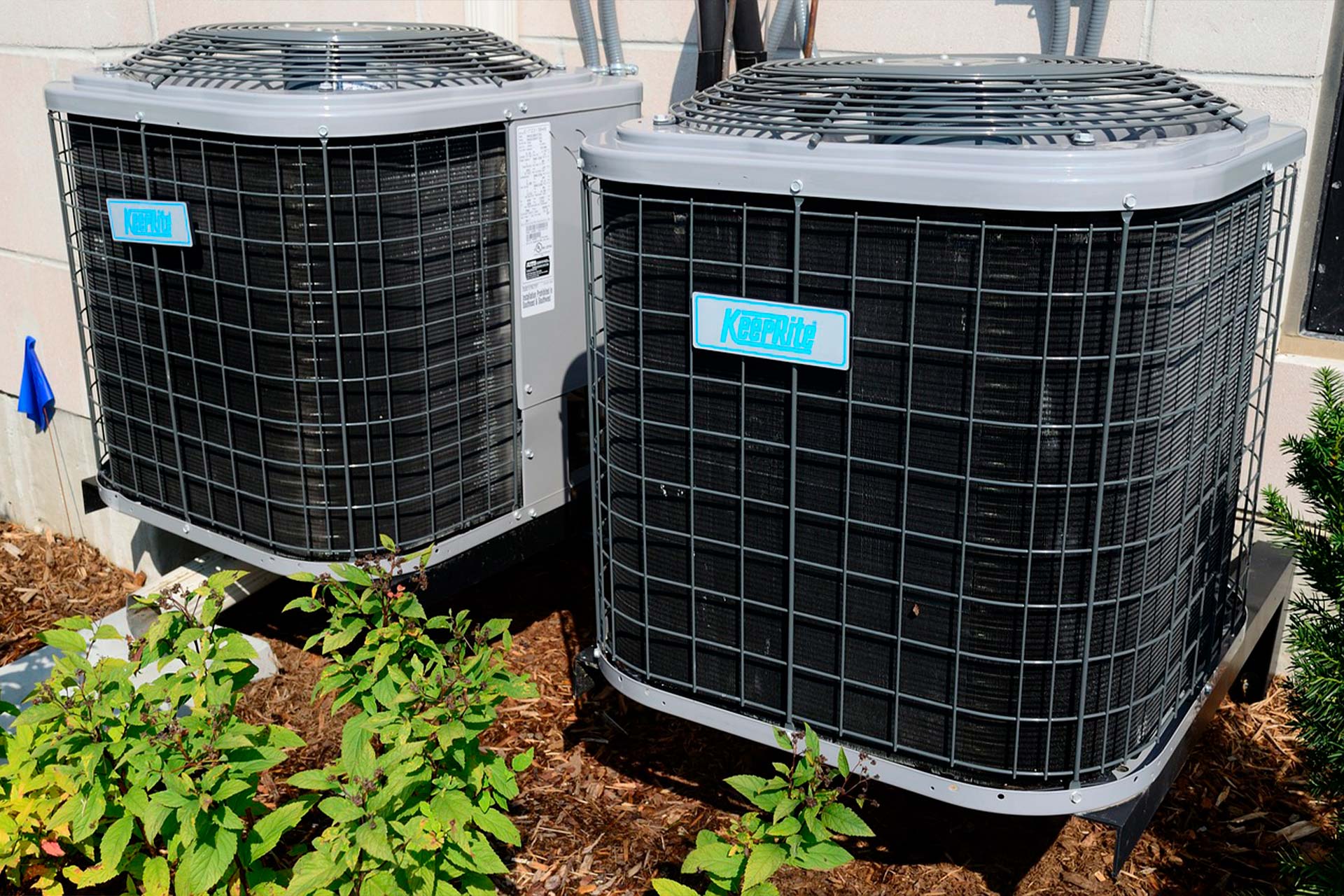
Coils are devices made of tubes of different materials, which usually have a spiral shape. Hot water, brine, steam, refrigerant, or cold water flows through these tubes in order to control the temperature of the fluid flowing inside.
Their operation begins when air passes through the tubes as it comes into contact with the coil area and, additionally, depending on the temperature of the fluids inside the tubes, it cools down, heats up, or it can also cool and dehumidify.
In short, in a refrigeration system, the function of coils is to cool or heat air. If it is a cold room where certain relative humidity conditions must be maintained, their function is dehumidification, i.e., controlling humidity.
To improve efficiency, coils require fins that help capture heat and thus optimize the exchange between heat and the fluid flowing internally through the coil. These fins can be made of various materials and designs.
It is worth noting that, in plants where hot gas turbines are used and the heat is discharged, coils could be used to harness the emitted heat in other processes that require it, such as heating water, among other applications.
Coil spacing will determine the temperature achieved. If a lower temperature is required, the number of coils installed per inch should be lower.
When dealing with a negative temperature below 0°C, the spacing should be greater, approximately about four per inch. For temperatures closer to 0°C, the spacing should be about 6 per inch.
We can classify coils according to the material used in their manufacture and their application.
According to the material used, they may be:
On the other hand, depending on their application, there are coils for heating, freezing, refrigeration, industrial processes, air conditioning, laboratories, wind tunnels, water cooling, refrigerated transport, etc.
Many industries use coils for their refrigeration systems, including:
There are three types of standard-configuration cooling coils:
The appropriate coil will be selected according to the needs of each reactor. They are made of the same material as the reactors and can be removed. They also have plugs used to seal the head openings that could normally become outlet or inlet options when cooling is not required.
Industrial coils are made from the following materials:
In general, the use of these materials is essential in most sectors that require a refrigeration system during their process, from a simple air-conditioning mechanism to environments where substances such as sulfuric acid are required, in the petrochemical industry.
In the automotive industry, they have become an indispensable component. The use of these devices is vital for the optimal operation of the automatic transmission.
They serve to cool the oil as it circulates to the vehicle’s components, preventing rubber parts, certain metal components, and filters from being damaged, as this could lead to costly consequences.
In an automatic transmission, oil is the most important fluid, and if temperature levels rise uncontrollably, it will lose its viscosity and oxidize. This would accelerate wear on the system components.
These types of coils perform the same functions and are made from the same materials as those used in refrigeration systems.
Finally, since they are sometimes located outdoors and are prone to environmental damage, it is important to emphasize the need for proper coil maintenance and cleaning. This should be specific and case-dependent to ensure proper equipment performance.
Currently, the refrigeration and air conditioning industry is undergoing a complete transformation. Growing concern over…
In numerous industrial sectors, controlling and reducing temperature in production processes is a fundamental necessity…
Today, energy efficiency and sustainability are more important than ever, which is why understanding the…
There are several types of heat exchangers, each adapted to different needs and operating conditions.…
If you would like to learn what aerothermal energy is, how it works, whether it…
Aerothermal energy has become one of the most efficient and sustainable solutions for heating and…