
In this article, we will explore the advantages and disadvantages of aerothermal energy. Stay with us and discover what it consists of and how its use can benefit you.
What is aerothermal energy?
Before looking at the advantages and disadvantages of aerothermal energy, we will explain exactly what aerothermal energy is.
Aerothermal energy is a form of climate control based on the use of hot or cold air. The output of hot air in winter and the intake of cold air in summer serve to change the thermal conditions of a home or office, as well as its relative humidity. In other words, it allows for climate control within these spaces.
The temperature of the air entering and leaving depends on whether the goal is to heat or cool the ambient temperature. In these cases, heating and cooling systems are employed.
It is an air conditioning technique that uses a natural ventilation system to transport hot or cold air from the area where you want to maintain the temperature to the areas where it is needed. It is ideal for older constructions that lack good airflow distribution within the building.
It is also a good alternative to the use of conventional climate control equipment in places where there is no access to buildings or premises constructed with closed materials, such as a campsite.
Aerothermal energy is a fast, efficient, and clean form of heating, as it does not generate changes in the atmospheric balance of the environment. For this reason, it is widely used in large buildings such as shopping centers or major tourist resorts, where spaces are open and exposed to the outdoor climate.
Next, we will look at the main advantages and disadvantages of aerothermal energy.
Advantages and disadvantages of aerothermal energy
The application of aerothermal technology is an option that offers many advantages. These include:
The main advantage of this system is that it requires no energy expenditure and, therefore, does not pollute the environment. Consequently, it is perfect for buildings that need cool air in summer and warm air in winter but do not have modern facilities or do not wish to incur high economic costs.
It also improves air quality, as aerothermal energy uses air as a medium to transfer heat; thus, there are no higher temperatures in the places where hot or cold air is generated, nor are there environmental pollutants.
For this reason, it is used to reduce energy expenditure in many industrial processes. Furthermore, it provides environmental comfort to the user and prevents respiratory disorders resulting from excessive temperatures.
It is important to know that aerothermal energy offers the possibility of reducing costs: the device cools by natural convection, so it requires no external heating or cooling. This considerably reduces maintenance and energy supply costs.
Similarly, it helps reduce environmental noise and atmospheric pollution, as no motors are used; instead, the airflow is produced by its own weight and gravity. This translates into improved comfort and quality of life.
It reduces electrical energy consumption, since there is no need to turn on radiators to maintain the appropriate temperature inside the building or room. At the same time, it is an efficient way to use renewable energy.
Aerothermal energy allows for lowering the temperature in a space. This is done through the use of air conditioning or ventilation devices, which extract heat from the environment and transport it elsewhere, where it is used to produce energy or cooling.
Air currents are generated automatically within the building structure due to the temperature difference between its two ends. These currents produce a natural movement of acoustic phenomena and humidity toward the upper parts of the exterior or interior walls.
As a result, there are no issues with echoes or high humidity levels in any part of the building.
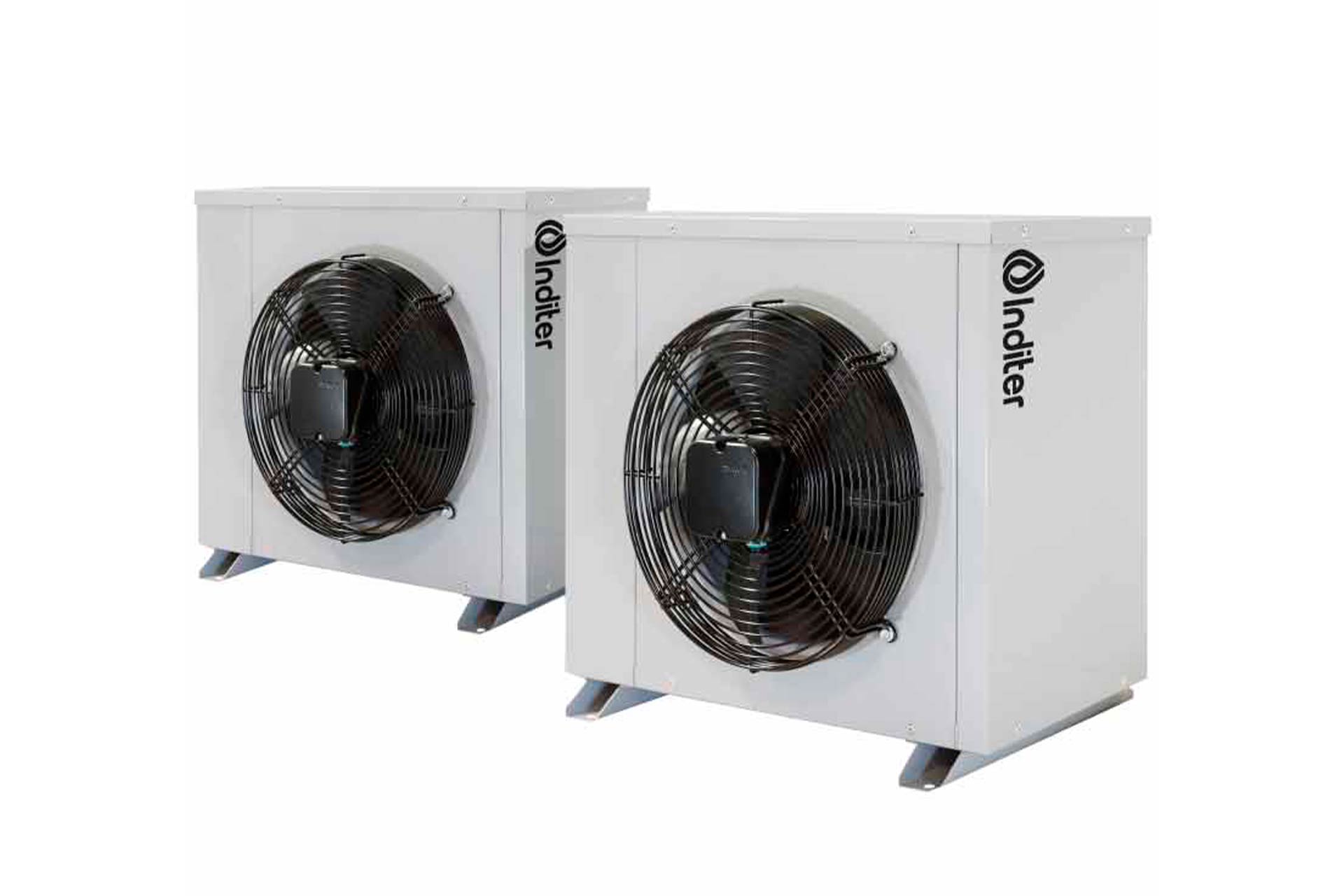
Advantages and disadvantages of aerothermal energy
The main disadvantage of aerothermal energy is its price. Generally, hot air climate control systems are more expensive than other domestic climate control systems.
Furthermore, manufacturers usually recommend using a thermostat to regulate the ambient temperature. If a thermostat is not used, it is possible to lose control over the temperature, and energy consumption may be higher than expected. For this reason, the price of equipment and installation is higher than in other systems.
One of the problems with aerothermal energy is that its installation is not very simple and requires a specialized technician; moreover, it is not cheap, although this depends on many factors such as the type of heating chosen or the materials used for the installation.
A significant drawback of this technology is the noise produced by the flow of conditioned hot air and by the ventilation system required to evacuate it from inside the home. Some models incorporate a noise filter to mitigate this problem, but it does not completely eliminate the sound.
Maintenance of the system can be costly and complicated if one does not have a basic understanding of electricity and plumbing, as well as knowledge of the system components, their operation, and any anomalies that might occur.
Additionally, there is also a loss of energy and hot water. This happens because the evaporation of hot water generates thermal energy, which is used to cool the indoor air. Therefore, if the system does not recover this excess energy, it is lost and cannot be used for other domestic activities.
It is also essential to emphasize that during periods of low temperatures, energy consumption is higher due to the increase in outdoor temperatures.
We hope this article on the advantages and disadvantages of aerothermal energy has helped you learn more about this form of climate control.